
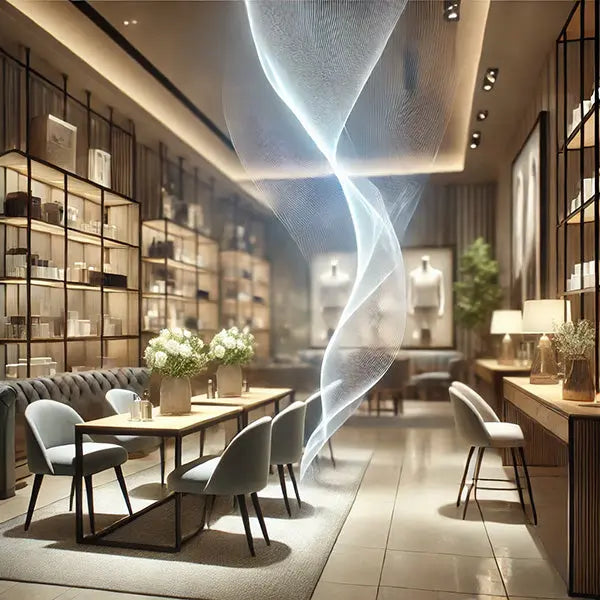
Ontdek Geurmarketing Strategieën en Voordelen
Geurmarketing: geur als onderdeel van je merkbeleving
Wanneer bedrijven nadenken over hun merkbeleving gaat het vaak eerst over kleuren, interieur, logo, verlichting en muziek. Maar ook geur bepaalt hoe een ruimte wordt ervaren.
Met geurmarketing wordt geur bewust afgestemd op de uitstraling van een winkel, hotel, kantoor, showroom of andere professionele omgeving.
Het doel is niet simpelweg dat een ruimte “lekker ruikt”. Een goed geurconcept sluit aan bij het merk, de omgeving en de gewenste sfeer en wordt op een subtiele, consistente manier door de ruimte verspreid.
Wat is geurmarketing?
Geurmarketing, ook wel scent marketing, is het bewust inzetten van geur als onderdeel van de ervaring rondom een merk of locatie.
Daarbij wordt niet willekeurig een luchtverfrisser geplaatst. Er wordt gekeken naar welke geurrichting past bij de identiteit, het interieur, de doelgroep en de functie van de ruimte.
Een moderne showroom kan bijvoorbeeld een heel andere geur vragen dan een wellnessruimte, hotelreceptie of zakelijke lobby.
Wanneer dezelfde geurrichting consequent wordt gebruikt, kan deze bovendien onderdeel worden van de herkenbare uitstraling van een merk.
Waarom speelt geur zo'n bijzondere rol in beleving?
Geuren kunnen sterke associaties oproepen met plaatsen, situaties en herinneringen.
Denk bijvoorbeeld aan de geur van versgebakken brood, zonnebrandcrème, een bos na regen of een bepaalde parfum die je direct aan iemand doet denken.
Dat maakt geur interessant voor organisaties die naast het visuele interieur ook een herkenbare zintuiglijke ervaring willen creëren.
Hoe voelt de ruimte?
Een frisse, warme, bloemige of houtachtige geur kan een heel andere indruk geven van dezelfde omgeving.
Een eigen geuridentiteit
Consequent gebruik van dezelfde geurrichting kan bijdragen aan een herkenbare identiteit van een locatie of merk.
Geur en interieur
Geur kan aansluiten op materialen, kleuren, verlichting en muziek zodat verschillende onderdelen van de ruimte beter als één geheel worden ervaren.
Vanaf de eerste stap binnen
Vooral in entrees, lobby's en ontvangstruimtes kan geur direct onderdeel worden van de eerste indruk.
Geurmarketing is geen truc om klanten te sturen
Geurmarketing wordt soms voorgesteld alsof één bepaalde geur automatisch zorgt voor meer aankopen, langere verblijfsduur of ander voorspelbaar gedrag.
Zo eenvoudig werkt het niet.
Hoe iemand een geur ervaart hangt onder andere af van persoonlijke voorkeur, eerdere associaties, cultuur, intensiteit en de omgeving.
Daarom zien wij geur vooral als een middel om merkbeleving, sfeer en herkenning te ondersteunen, niet als een gegarandeerde manier om gedrag te sturen.
Van geurmarketing naar scent branding
Wanneer een geur structureel aan een merk wordt gekoppeld, wordt ook gesproken over scent branding of een geuridentiteit.
Het idee is vergelijkbaar met een vaste kleur, typografie of muziekstijl: de geur wordt onderdeel van de herkenbare wereld rondom het merk.
Dat kan één specifieke geur zijn, maar ook een herkenbare geurfamilie die op verschillende locaties of in verschillende ruimtes terugkomt.
Waar wordt geurmarketing toegepast?
Winkels & showrooms
In winkels kan geur worden afgestemd op het assortiment, interieur en gewenste merkuitstraling. Denk aan fris en modern, warm en natuurlijk of juist verfijnd en elegant.
Hotels & lobby's
Een herkenbare geur in entree en lobby kan onderdeel worden van de ontvangst en terugkomen op verschillende plekken binnen het hotel.
Kantoren & recepties
Ook een kantoor kan een herkenbare geurbeleving krijgen, vooral in entree, receptie, vergaderruimtes en klantzones.
Spa & praktijk
Bij wellness en behandelruimtes ligt de nadruk meestal op een subtiele geur die aansluit op rust, verzorging en het interieur.
Showrooms
In een showroom kan een geurrichting worden gekozen die aansluit bij bijvoorbeeld modern design, luxe, technologie of sportiviteit.
Beurzen & evenementen
Een tijdelijke geurbeleving kan een stand of presentatie ondersteunen wanneer de geur logisch aansluit bij het concept en de omgeving.
Geurmarketing in horeca vraagt om extra aandacht
Horeca is een bijzondere omgeving omdat eten en drinken zelf al een belangrijk geurprofiel hebben.
Een aanvullende huisparfum moet daarom niet concurreren met de geur en smaakbeleving van gerechten.
Geurmarketing kan daarom bijvoorbeeld beter worden toegepast in een entree, lobby, receptie of sanitaire zone dan direct naast tafels of een open keuken.
Geurmarketing in wellness en hospitality
In een wellnessomgeving draait geur vooral om samenhang. Een lichte frisse geur kan bijvoorbeeld passen bij een entree, terwijl een zachter of houtachtiger profiel kan aansluiten bij een rustige ontspanningsruimte.
Ook hier geldt dat de geur niet zo sterk hoeft te zijn dat deze voortdurend de aandacht trekt.
Subtiele geurverspreiding past vaak beter bij een omgeving waarin rust en comfort centraal staan.
Welke geur past bij een merk?
De juiste geur begint niet bij de vraag welke geur het populairst is.
Begin liever bij de merkidentiteit: hoe moet de ruimte worden ervaren?
Modern & helder
Frisse, aquatische en groene geuren kunnen aansluiten bij moderne, lichte en minimalistische ruimtes.
Warm & stijlvol
Houtachtige geuren combineren vaak mooi met natuurlijke materialen, donkere tinten en een warme uitstraling.
Elegant & verfijnd
Lichte bloemige geurprofielen kunnen passen bij salons, boutiques, hospitality en andere verfijnde concepten.
Levendig & toegankelijk
Fruitige en citrusachtige geuren kunnen een frisse, energieke en toegankelijke indruk geven.
Hoe ontwikkel je een geurconcept?
Een goede geurstrategie begint bij de ruimte en het merk, niet bij de diffuser.
Bepaal de gewenste uitstraling
Moet het merk fris, modern, natuurlijk, warm, verfijnd of juist energiek aanvoelen?
Kijk naar de ruimte
Analyseer functie, interieur, luchtvolume, ventilatie en bestaande geuren.
Kies een geurrichting
Selecteer één of meerdere geurprofielen die bij de uitstraling en doelgroep passen.
Stem de intensiteit af
Zorg dat de geur herkenbaar aanwezig is zonder dat deze de ruimte gaat overheersen.
Eén geur of verschillende geurzones?
Een kleinere locatie kan prima met één herkenbare geurrichting werken.
Bij grotere gebouwen kan geurzonering interessanter zijn. Een entree kan bijvoorbeeld iets frisser worden ingericht, terwijl een lounge een warmer profiel krijgt.
Belangrijk is dat de verschillende geuren qua karakter bij elkaar passen en gezamenlijk onderdeel blijven van dezelfde merkidentiteit.
Goede geurmarketing hoeft niet sterk te ruiken
Een veelgemaakte fout is denken dat geurmarketing pas werkt wanneer bezoekers de parfum direct nadrukkelijk opmerken.
In veel zakelijke omgevingen werkt een subtielere geurbeleving juist natuurlijker.
De geur mag onderdeel zijn van de ruimte zonder dat bezoekers voortdurend bewust bezig zijn met het feit dat er een geurverspreider aanwezig is.
Houd ook rekening met geurwenning: medewerkers die dagelijks in dezelfde omgeving werken kunnen de geur na verloop van tijd minder sterk ervaren dan iemand die net binnenkomt.
Professionele geurverspreiding
Voor een consistente geurbeleving is niet alleen de parfum belangrijk, maar ook de manier waarop deze wordt verspreid.
Een elektrische geurverspreider kan praktisch zijn omdat de geur gedurende de dag automatisch wordt verspreid.
De Ambielectric diffuser wordt rechtstreeks in het stopcontact geplaatst en werkt zonder water en zonder open vuur.
Een navulling werkt bij normaal gebruik minimaal ongeveer 30 dagen.
De juiste capaciteit voor de ruimte
Een geurconcept kan alleen goed worden toegepast wanneer de diffuser voldoende bereik heeft.
Kijk daarom naar het totale luchtvolume en niet alleen naar het aantal vierkante meters.
Ambielectric Star
Voor kleinere ontvangstruimtes, praktijken, kantoren en andere compactere bedrijfsruimtes.
Ambielectric Plus
Voor grotere winkels, showrooms, kantoren, lobby's en andere ruimtes met meer luchtvolume.
Geurmarketing of geurverwijdering?
Een belangrijke stap wordt soms vergeten: controleer eerst of er een ongewenste geur in de ruimte aanwezig is.
Heb je bijvoorbeeld structureel last van rookgeur, dierengeur, vochtige lucht of een andere nare geur? Dan is alleen een sterkere huisparfum niet de beste oplossing.
Pak eerst de geurbron aan en gebruik indien nodig een neutraliserende oplossing.
Pas daarna kun je gericht werken aan de gewenste merk- of sfeerbeleving.
Wanneer past een geurconcept bij je merk?
Een geurconcept hoeft niet te worden beoordeeld op één wonderbaarlijk marketingcijfer.
Praktischer is om te kijken of de geur logisch aansluit bij het merk en prettig wordt ervaren door bezoekers en medewerkers.
Bij het evalueren kun je bijvoorbeeld letten op:
- past de geur bij het interieur en de merkuitstraling?
- is de geurintensiteit prettig en niet overheersend?
- wordt de geur gelijkmatig door de ruimte verspreid?
- zijn er verschillen tussen zones binnen het gebouw?
- hoe reageren bezoekers en medewerkers op de geur?
- blijft de ervaring consistent gedurende de dag?
Welke geur past bij jouw merk en bedrijfsruimte?
Vertel ons iets over je bedrijf, interieur, doelgroep en de ruimte waarin je geur wilt inzetten. Dan helpen we je bij het bepalen van een passende geurrichting en diffuser.
Vraag gratis geuradvies aan →Veelgestelde vragen over geurmarketing
Wat is geurmarketing?
Geurmarketing is het bewust inzetten van geur als onderdeel van de ervaring en uitstraling van een merk, winkel, hotel, kantoor of andere professionele locatie.
Wat is scent branding?
Scent branding gaat een stap verder en koppelt een herkenbare geurrichting structureel aan een merk of locatie. Geur wordt daarmee onderdeel van de merkidentiteit.
Zorgt geurmarketing ervoor dat klanten meer kopen?
Dat kun je niet als vanzelfsprekend beloven. De ervaring van geur verschilt per persoon en situatie. Geur kan vooral worden ingezet om sfeer, herkenning en merkbeleving te ondersteunen.
Welke geur past bij mijn bedrijf?
Dat hangt af van de uitstraling van het merk, het interieur, de doelgroep, de functie van de ruimte en de gewenste sfeer.
Hoe sterk moet geurmarketing ruiken?
Meestal hoeft een zakelijke geur niet nadrukkelijk aanwezig te zijn. Een subtiele en gelijkmatige geurbeleving sluit vaak beter aan bij een professionele omgeving.
Kan geurmarketing in meerdere ruimtes worden gebruikt?
Ja. Je kunt één herkenbare geurrichting door het gebouw gebruiken of werken met verschillende geurzones die qua karakter op elkaar aansluiten.
Meer over professionele geurmarketing
Geurmarketing voor winkels en showrooms
Bij geurmarketing voor winkels gaat het om meer dan een ruimte lekker laten ruiken.
De gekozen geur kan worden afgestemd op het assortiment, interieur en de positionering van het merk. Een minimalistische designwinkel kan bijvoorbeeld een andere geurrichting vragen dan een warme woonwinkel.
Ook de plaatsing en intensiteit zijn belangrijk. De geur moet zich voldoende door de winkel verspreiden zonder dat bezoekers direct naast een diffuser een veel sterkere geur ervaren.
Zo wordt geur onderdeel van dezelfde totaalbeleving als verlichting, muziek, presentatie en interieur.
Geurmarketing voor kantoor en ontvangstruimte
Ook geurmarketing op kantoor kan onderdeel zijn van de uitstraling van een organisatie.
Vooral entree, receptie, wachtruimte en vergaderkamers zijn logische plekken om een herkenbare geurbeleving toe te passen.
In werkruimtes waar medewerkers uren achter elkaar verblijven is een terughoudende geurintensiteit extra belangrijk.
Houd daarnaast rekening met persoonlijke verschillen: niet iedereen ervaart dezelfde geur op dezelfde manier.
Geur als onderdeel van je merkidentiteit
Bij scent branding wordt een geur niet als los product gezien, maar als onderdeel van de totale merkidentiteit.
Net zoals een merk consequent dezelfde kleuren, typografie en visuele stijl gebruikt, kan ook een herkenbare geurrichting terugkomen op verschillende locaties.
De geur hoeft daarbij niet overal exact even sterk te zijn. De intensiteit kan per ruimte worden aangepast terwijl de geurfamilie herkenbaar blijft.
Vooral voor merken met meerdere fysieke locaties kan zo een meer consistente zintuiglijke ervaring ontstaan.
Welke professionele geurverspreiding past bij mijn bedrijfsruimte?
Bij professionele geurverspreiding is zowel de geurkeuze als de capaciteit van de diffuser belangrijk.
Bereken daarom eerst het totale luchtvolume van de ruimte: lengte × breedte × hoogte.
Ambielectric Star is geschikt voor ruimtes tot ongeveer 200 m³. Voor grotere ruimtes kan Ambielectric Plus, met een bereik tot ongeveer 400 m³, beter passen.
Houd daarnaast rekening met deuren, ventilatie, plafondhoogte, indeling en de plek waar bezoekers of medewerkers langere tijd verblijven.

